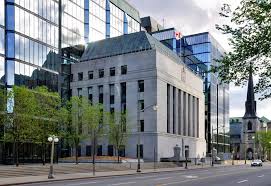

Yesterday the Bank of Canada (BoC) decided to cut its Key rate by 0.25% to 2.5%, making the prime rate of lending with major FI’s will now be 4.7%.
Reasons that the BoC is giving for this rate cut are:
- Canada’s GDP declined by about 1½% in the second quarter, as expected, with tariffs and trade uncertainty weighing heavily on economic activity.
- Exports fell by 27% in the second quarter, a sharp reversal from first-quarter gains when companies were rushing orders to get ahead of tariffs.
- Business investment also declined in the second quarter. Consumption and housing activity both grew at a healthy pace. In the months ahead, …weakness in the labour market will likely weigh on household spending.
- Employment has declined in the past two months…. Job losses have largely been concentrated in trade-sensitive sectors, while employment growth in the rest of the economy has slowed, reflecting weak hiring intentions. The unemployment rate has moved up since March, hitting 7.1% in August, and wage growth has continued to ease.
- CPI inflation was 1.9% in August, … Excluding taxes, inflation was 2.4%. Preferred measures of core inflation have been around 3% in recent months, but on a monthly basis the upward momentum seen earlier this year has dissipated. A broader range of indicators, including alternative measures of core inflation and the distribution of price changes across CPI components, continue to suggest underlying inflation is running around 2½%. The federal government’s recent decision to remove most retaliatory tariffs on imported goods from the US will mean less upward pressure on the prices of these goods going forward.
- With a weaker economy and less upside risk to inflation, Governing Council judged that a reduction in the policy rate was appropriate to better balance the risks.
It appears that the BoC is not really sure what the inflation rate is! We have not seen a dance around what the inflation rate is by the BoC before.
Canada’s economy is in the basement. Federal government policy is devoid of measures to support economic health and growth. Parliament has barely been in session for a year now. Ottawa has turned stagnant, as has the Canadian economy.
Tariffs are not the reason for a poor economy – 80% of Canada’s trade is governed by the CUSMA / USMCA agreement. Only strategic products such as steel and aluminum, and long-disputed issues such as Canada’s marketing boards and timber, are currently targeted by the U.S. administration.
As well, the Federal government refuses to support Canada’s number one export – oil & gas. Pipelines are needed to get product to other markets other than the U.S. If this were made a priority, most of Canada’s economic woes would be eliminated. Canada could then focus on adding value before exporting.
Canadian Productivity remains near the bottom of Western economies, whether measured in dollars input to dollars output or hours input to units output. It remains a primary hindrance to a healthy economy. The starting point to fix this would be tax cuts to businesses and consumers alike.
For more discussion, advice or services about your personal or business financial requirements, do not hesitate to contact us at www.mortgagelogic.ca