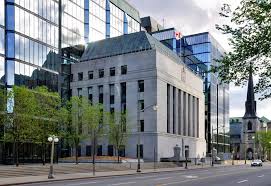

The Bank of Canada (BoC) announced today that it has lowered its policy interest rate by 25 basis points (0.25%), in the heat of significant geopolitical tensions. This is the seventh reduction since June of 2024, and will push the Prime Rate for Canadian financial institutions to 4.95% (this is well within the long-term average range of the Canadian Prime Rate). Although economic growth has been stronger than expected, uncertainty caused by constantly changing US tariff threats is slowing business and consumer spending. Commentary and interpretation follow:
Canada’s Economic Performance of Late
• Canada’s economy grew by 2.6% in the fourth quarter of 2024 following growth of 2.2% in the third quarter
• The negative impact of slowing domestic demand has been partially offset by a surge in exports in advance of tariffs being imposed
• Growth is stronger than was expected when the BoC last reported in January 2025
• Previous cuts to interest rates have increased economic activity, particularly consumption and housing
• Economic growth in the first quarter of 2025 will most likely slow as the pressing trade conflict with the U.S. weighs upon government and consumer behavior.
• Recent data shows a reduction in business spending as businesses postpone investments
Canadian Inflation and Looking Forward
• CPI (Consumer Price Index) remains close to the Bank’s 2% target
• Inflation is expected to increase to about 2.5% in March with the end of the GST/HST tax break
• BoC’s core inflation remains above 2%, mainly because of continuing shelter/housing price inflation
• Short-term inflation concerns have risen because of the impact of tariffs on prices
Labour Market
• Canada’s Employment growth strengthened in November through January. The unemployment rate declined to 6.6%
• Job growth was experienced in February.
• Heightened trade tensions with the U.S. could disrupt the recovery in the jobs market. Wage growth has moderated.
Summary
The BoC says the Canadian economy entered 2025 “in a solid position,” with inflation close to its 2% target and “robust” GDP growth. However, heightened trade tensions and tariffs imposed by the United States will likely slow the pace of economic activity and increase inflationary pressures in Canada. The economic outlook continues to be subject to more-than-usual uncertainty because of the rapidly evolving policy landscape.
The BoC stated that monetary policy “cannot offset the impacts of a trade war.” What monetary policy “can and must do” is ensure that higher prices do not lead to ongoing inflation.
For further discussion and information on real estate financing for commercial or residential purposes, call Mortgage Logic!